Receipts That Lie: The Quiet Rewriting of Your Purchase History
You bought something. You returned it. You have the confirmation email, the screenshot, maybe even a printed slip. So why does your account say something different?
This is the part of retail nobody talks about openly. Not because it's rare — but because most people assume their purchase history is a neutral document. A ledger. Something fixed. It isn't. And the gap between what you think your account records and what it actually shows is getting wider.
The Account History Illusion
When you log into Amazon, Walmart, Target, or any major retailer's app, the order history section feels official. Dates, amounts, item names, return statuses — it reads like a legal record. But here's the thing: it's not. It's a display layer. A rendered view of whatever data the retailer's backend decides to surface at that moment.
That distinction matters more than most people realize.
Retailers control the database. They control what gets flagged, archived, hidden, or reclassified. And while there are consumer protection laws that govern receipts in certain contexts, there's surprisingly little legal scaffolding around what a company can do to its own internal customer-facing records — especially when those records are stored on their servers, not yours.
The result? A system where your purchase history can be quietly altered, and you might not notice for weeks. Or ever.
What's Actually Getting Changed — And Why
Let's be specific. There are a few patterns that keep coming up when you dig into consumer complaint boards, Reddit threads, and Better Business Bureau filings.
Refund records going soft. A refund gets processed, shows as "complete" in your account, then disappears or gets reclassified as "pending" weeks later — typically right around when a customer tries to escalate a dispute. The money may or may not have actually moved. The record, though, no longer clearly supports the customer's claim.
Timestamps shifting. Return windows are everything in retail. Miss the 30-day cutoff by even a day and a return can be denied. Some customers have reported that the purchase date shown in their account doesn't match their confirmation email — a discrepancy of a day or two that happens to push the item outside the return window. Convenient.
Item descriptions getting vague. A specific product name gets replaced with a generic category label. This matters when you're trying to prove what you actually bought — for a warranty claim, an insurance reimbursement, or a dispute with your credit card company.
Return history scrubbing. Several large retailers track return behavior and quietly flag or limit accounts that return frequently. The troubling part isn't the flagging — it's that in some cases, the return history used to justify the restriction gets altered or compressed in ways that make it harder for the customer to audit their own behavior.
The Technical Side of How This Works
Retail platforms aren't monolithic. They're stacked systems — inventory management, customer relationship software, payment processors, loyalty programs — all loosely stitched together. When you view your order history, you're not looking at a single source of truth. You're looking at a query result, assembled in real time from multiple databases.
That architecture creates opportunity. A retailer can update a field in one system without that change propagating to every layer. They can archive records to cold storage where they're technically still accessible but no longer displayed. They can run batch processes — often overnight — that reclassify transactions based on internal criteria you never agreed to and were never shown.
None of this requires anyone to make a deliberate, malicious decision. A lot of it happens through automated policy enforcement. Algorithms doing what they were told. Which, in some ways, makes it harder to fight — there's no individual to hold accountable, just a process.
What You Can Actually Do About It
The honest answer is: not as much as you should be able to. But there are moves worth making.
Screenshot everything immediately. This sounds paranoid until it isn't. The moment you complete a purchase, return, or refund, screenshot the confirmation page and the account record. Email yourself the images with a timestamp. Your email server's metadata becomes your backup receipt.
Download your data. Most major retailers offer some version of a data download under privacy settings — often because state laws like California's CCPA require it. Pull this periodically. It gives you a snapshot of what their system held at that moment, which you can compare against later if something changes.
Cross-reference with your bank. Your bank's transaction records are independent. They don't care what the retailer's account page says. If a refund shows as complete in your account but doesn't appear in your bank statement within the expected window, that's a paper trail the retailer can't touch.
File disputes early. Credit card chargebacks have time limits, but they're one of the most effective tools consumers have. If a refund is promised and then the record goes murky, initiate the chargeback before you lose the window. You can always cancel it if the retailer comes through.
Use your state AG's office. Consumer protection complaints filed with state attorneys general actually get logged and tracked. Individual complaints rarely trigger action, but patterns do. If you're seeing your records altered, filing a complaint creates a paper trail that contributes to a larger picture.
The Bigger Discomfort
There's something philosophically unsettling about this whole situation that goes beyond any single retailer or transaction. We've moved into an era where the record of commerce is controlled by one party in the transaction — and it's not you.
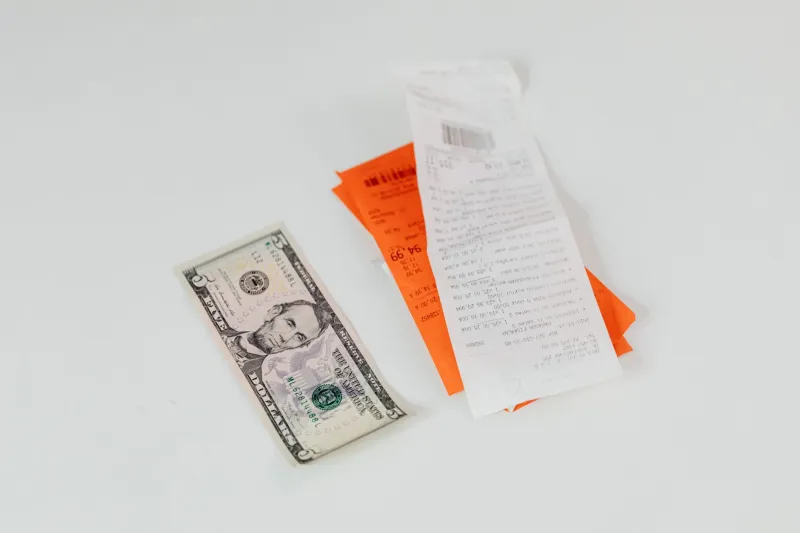
The receipt used to be yours. A physical thing you held. Now it lives in an account on someone else's server, displayed through an interface you don't control, generated by systems you can't audit. You're trusting the ledger to be honest without any real mechanism to verify that it is.
Retailers will tell you this is all just system complexity. Edge cases. Glitches. And sometimes that's true. But "glitches" that consistently benefit the retailer — that push return dates forward, obscure refund statuses, or quietly trim return histories — start to look less like accidents and more like policy.
Your purchase history isn't a neutral document. Treat it like one at your own risk.