Riding Shotgun With Your Own Data: The Secret Life of Your Car's Dashboard
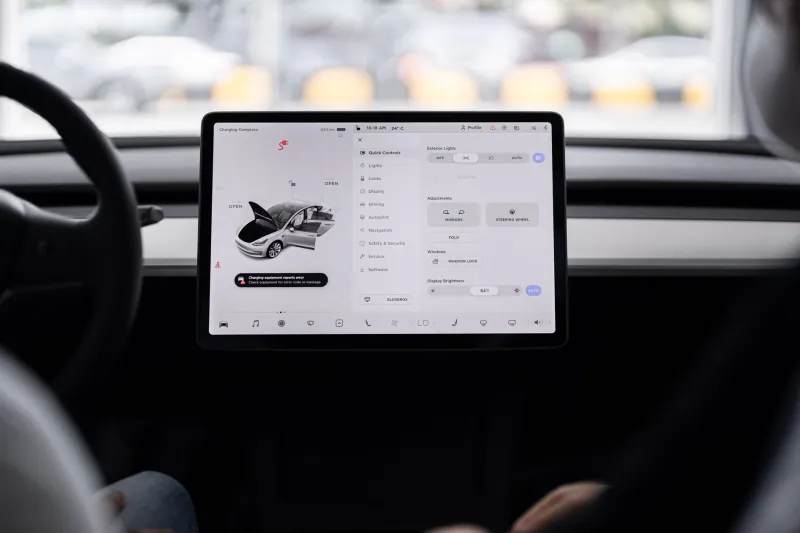
There's a version of you that never gets out of the car. It just stays there — sitting in the data logs, the navigation history, the contact lists pulled off your phone the first time you hit "Allow" on that Bluetooth pairing screen. You forgot about it. The automaker didn't.
Modern vehicles are, at their core, rolling data collection platforms. The infotainment system sitting in your dash — the one you use to skip songs, get directions, and occasionally yell at when it mishears you — is doing a lot more than playing music. It's building a profile. And unlike the data harvested from your phone or laptop, most Americans have almost no framework for thinking about what their car knows.
That's the gap worth sitting with for a minute.
What the Dashboard Actually Logs
Let's be specific, because vague privacy concerns have a way of sliding off people's attention. Here's what your infotainment system is typically recording:
Bluetooth pairing histories don't just remember your phone. They remember every device that's ever connected — your partner's phone, a friend's tablet, a work laptop plugged in for a conference call. Each of those pairings carries metadata: timestamps, device names, sometimes the contact lists and call logs pulled from connected phones depending on the permissions you (or they) granted.
Navigation patterns are essentially a diary. Where you go, when you go, how often you make the same trip, which routes you favor — and critically, which destinations you've searched for but never actually drove to. That last category is particularly intimate. Searched for a medical clinic but turned around? The log still exists.
Voice command transcripts are stored in ways most drivers don't realize. When you talk to your car's built-in assistant, that audio or its processed text equivalent often doesn't just evaporate. Depending on the system — and the agreements buried in the terms of service you clicked through at the dealership — those commands can be retained, analyzed, and in some cases transmitted back to manufacturer servers.
Driving behavior telemetry — hard braking events, acceleration patterns, time of day driving, average speeds — rounds out the picture. This isn't just about safety features. This is monetizable behavioral data.
The Dealership Agreement You Didn't Read
Here's a thing that happens at almost every car purchase in America: you sign a stack of documents, one of which contains a connected services agreement that most buyers treat like a formality. That agreement often authorizes the automaker to collect, store, and — depending on the language — share or sell the data generated by your vehicle.
A 2023 investigation by Mozilla's Privacy Not Included project looked at 25 major car brands and found that all of them collected more personal data than necessary, with most sharing or selling that data to third parties. Several brands explicitly named data brokers and insurance companies as potential recipients.
The car companies' position is roughly: you agreed to this. And technically, that's accurate. But there's a difference between a signature and informed consent, and the industry has been comfortable living in that gap.
Why This Is Harder to Manage Than Phone Data
With your phone, you've got options. You can audit app permissions, turn off location services, use a VPN, factory reset when things feel out of hand. It's not perfect, but there's a degree of agency.
Your car is different in a few important ways.
First, the data collection is often baked into features you actually want. Turn-by-turn navigation. Automatic software updates. Remote start via app. Opting out of data collection frequently means opting out of the functionality, and automakers know this. The value exchange is deliberately constructed so that saying "no" feels like giving something up.
Second, the vehicle itself isn't really yours to configure the way a phone is. You can't install a privacy-focused ROM on your Chevy. The operating system is locked. The terms are set by the manufacturer, not by you.
Third — and this one gets overlooked — your car collects data about people who aren't you. Every passenger whose phone paired with your Bluetooth, every person who sat in the seat while the voice assistant was active. They never agreed to anything. Their data got harvested through your vehicle's permissions.
What Insurers Already Know
The insurance industry has been quietly building infrastructure around vehicle data for years. Usage-based insurance programs — the kind where you get a "discount" for letting a company monitor your driving — have been around long enough that they're mainstream now. Progressive's Snapshot. State Farm's Drive Safe & Save. These programs are the visible layer.
The less visible layer is what happens when insurers access data not through a voluntary plug-in device, but through manufacturer data-sharing partnerships. Some automakers have direct data-sharing arrangements with insurance data aggregators. LexisNexis and Verisk, two companies that compile driving behavior reports used by insurers to set premiums, have acknowledged receiving telematics data from automakers.
What this means practically: your driving behavior data may already be influencing your insurance rates without your explicit knowledge of how it got there. You signed something at the dealership. That something had downstream consequences you weren't walked through.
The Profile in the Passenger Seat
Zoom out and what you're looking at is a behavioral portrait assembled from thousands of micro-data points. Where you worship, which medical facilities you visit, whether you frequent certain neighborhoods, what time you leave for work, how aggressively you brake when you're running late — the infotainment system doesn't know what these things mean, but the algorithms processing its output do.
The "second you" that lives in your car's data logs is, in some ways, more honest than the one you present online. You curate your social media. You think before you type. But you don't think about your car watching when you take the long way home, or when you sit in a parking lot for twenty minutes, engine running, before going inside somewhere.
That version of you is being monetized. It's worth asking whether you knew you were selling it.
What You Can Actually Do
Options are limited but not nonexistent. Some steps worth taking:
- Check your vehicle's connected services settings. Most modern infotainment systems have a privacy or data menu buried in the settings. It won't always let you opt out of everything, but it's worth knowing what's there.
- Review what permissions your phone grants when it pairs. Android and iOS both let you control what data gets shared over Bluetooth. Contact lists and call logs don't need to sync just because you want to play music.
- Look up your automaker's privacy policy — specifically the sections on data sharing with third parties. It's dry reading, but it tells you who's getting what.
- Request your data. Under California's CCPA, residents can request what data an automaker holds on them. Other states have passed or are passing similar legislation. Use those rights.
The car sitting in your driveway knows your routines better than most people in your life. That's not a metaphor. It's a data architecture decision that someone made, and that you're living inside of whether you know it or not.
The dashboard faces forward. But everything it logs goes somewhere else entirely.