Same App, Different Beast: The Silent Rewrites Happening Inside Your Devices
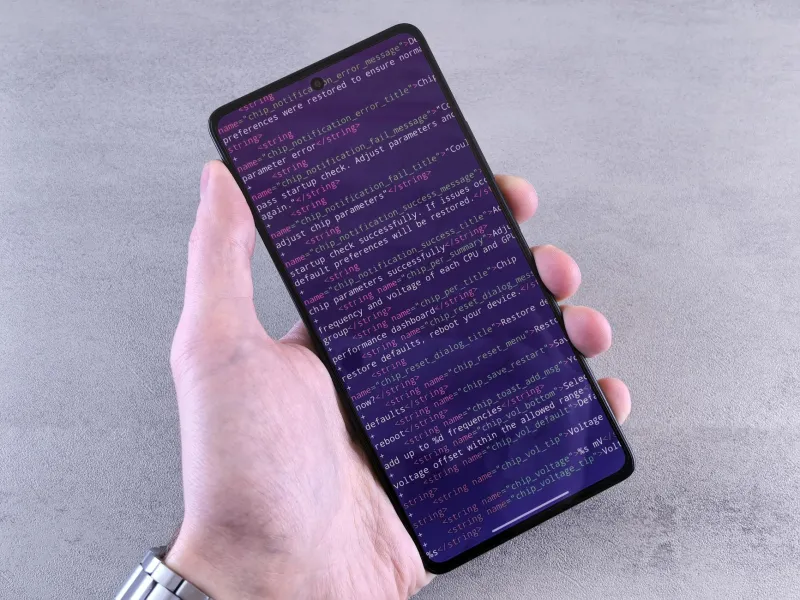
Your favorite app looks the same as it did last week. Same icon, same login screen, same general vibe. But underneath that familiar surface, something may have already changed — and nobody told you. Welcome to the era of the invisible rewrite.
There's a particular kind of unease that comes from realizing the floor has shifted while you were standing on it. That's essentially what's happening every night to millions of Americans — while they're asleep, their phones, tablets, smart TVs, and laptops are quietly being rewritten. Not dramatically. Not visibly. Just... differently.
The Update You Never Approved
Most people think of software updates as discrete events. A notification pops up, you tap "install," the device restarts, and you move on. Clean. Transparent. Consensual, even.
That's not really how it works anymore.
Modern platforms — and we're talking about everyone from Apple and Google to Spotify, TikTok, and your banking app — have shifted toward what engineers call continuous deployment. Instead of pushing big, numbered releases, they push tiny, incremental changes constantly. Some updates happen server-side, meaning the code running your experience changes without anything being installed on your device at all. You never see a notification because, technically, your app didn't update. The server did.
The result? The app you opened this morning may be operating on different logic than the one you closed last night.
A/B Testing as a Way of Life
Here's where things get particularly interesting — and a little unsettling.
A huge chunk of these silent modifications aren't bug fixes. They're experiments. Companies like Meta, Amazon, and Netflix run thousands of simultaneous A/B tests at any given moment. That means some users are seeing one version of an algorithm, one set of ranking rules, one content recommendation engine — and another group is seeing something entirely different.
You might be in a test group right now and have absolutely no way of knowing it.
What does that look like in practice? Maybe your feed suddenly feels more rage-inducing than usual. Maybe your streaming service started surfacing content you'd never normally watch. Maybe your navigation app started routing you differently. Could be a coincidence. Could also be that you've been quietly slotted into a behavioral experiment with no opt-out and no disclosure.
Federal law doesn't require companies to tell you when you're being tested. Their terms of service — which, let's be honest, nobody reads — typically include blanket language that covers this. You agreed to it when you signed up. Probably.
The Recommendation Engine That Woke Up Differently
Content recommendation systems deserve their own spotlight here, because they're among the most aggressively and continuously modified systems in consumer tech.
Think about how a platform like YouTube or Instagram decides what to show you. There's an algorithm at the center of that — a complex, layered set of rules that weighs your history, your engagement patterns, your device type, your location, the time of day, and dozens of other signals. That algorithm is not static. It's retrained on new data constantly. The weights shift. The priorities change.
A tweak that boosts "watch time" at the expense of "topic diversity" doesn't come with an announcement. There's no pop-up that says, Hey, we adjusted our recommendation weights last Tuesday and your feed is going to feel different now. It just... feels different. And most people chalk it up to their own changing tastes.
That's a convenient misattribution for the platforms involved.
Operating Systems Are in on It Too
This isn't just an app-level phenomenon. Your operating system — whether that's iOS, Android, Windows, or macOS — is doing its own version of this.
Apple and Google both have mechanisms that push configuration changes to devices without triggering a traditional software update. These can alter default behaviors, change how apps interact with system resources, modify privacy settings thresholds, and adjust background process rules. Microsoft has used similar mechanisms in Windows 10 and 11 to push UI changes and feature tweaks through what it calls "controlled feature rollouts."
Some of these changes are genuinely benign — security patches, performance fixes. But the infrastructure that delivers the benign stuff is the same infrastructure capable of delivering something else entirely. And the user has no dashboard, no log, no record of what changed and when.
Corporate Justifications and Why They're Mostly True (But Not Entirely)
To be fair — and Callyeav tries to stay fair — the companies doing this have real reasons for the approach.
Continuous deployment genuinely makes software more secure. Waiting months to patch a vulnerability in order to bundle it into a traditional release is how you end up with massive data breaches. The speed of modern threat landscapes basically demands the ability to push fixes instantly.
A/B testing does, in many cases, result in better products. Features that users actually hate get caught early. Interfaces that cause confusion get revised before they ship broadly.
And recommendation algorithm tuning, at its best, is an attempt to surface content that keeps users engaged and satisfied.
The problem isn't the mechanism. The problem is the opacity. There's a meaningful difference between "we updated our system to improve your experience" and "here is a changelog of what changed in your experience and why." The first is a PR statement. The second is transparency. Almost no major platform offers the second.
What You Can Actually Do (It's Not Much, But It's Something)
Let's be real: you're not going to opt out of this. It's baked into the architecture of modern software at a level that makes individual resistance mostly symbolic.
But there are a few things worth knowing.
For apps that matter to you — financial tools, health apps, anything handling sensitive data — pay attention to app store update notes, even though they're often useless filler. Third-party sites like AppAdvice or AppShopper sometimes track version history more granularly than official channels.
For recommendation systems, intentional disruption can be useful. Clearing your watch history, using apps in private or incognito modes occasionally, and diversifying the accounts you interact with can reduce how confidently an algorithm thinks it knows you — which gives you slightly more control over what it serves.
For operating systems, keeping an eye on tech journalists who specifically cover platform changes (The Verge, Ars Technica, 9to5Mac) will catch the big stuff, even if the micro-changes stay invisible.
The Floor Is Always Moving
Here's the thing about living in a digital environment that never stops changing: it subtly reshapes you too.
When your feed gets angrier, you get a little more primed for outrage. When your recommendation engine starts nudging you toward longer content, your tolerance for short-form stuff shifts. When your navigation app reroutes you differently for weeks, you stop remembering the old way.
The software is learning you. But it's also, quietly, teaching you.
And the whole process runs on a foundation of plausible deniability — because if you can't see what changed, you can't really object to it. You just adapt. You absorb the new normal and call it your own.
That's not an accident. That's the design.
Beneath the surface, beyond the signal — something is always being rewritten. The question is whether you ever get to know what.