Dead Air Isn't Dead: The Ghost Frequencies Still Haunting the American Airwaves
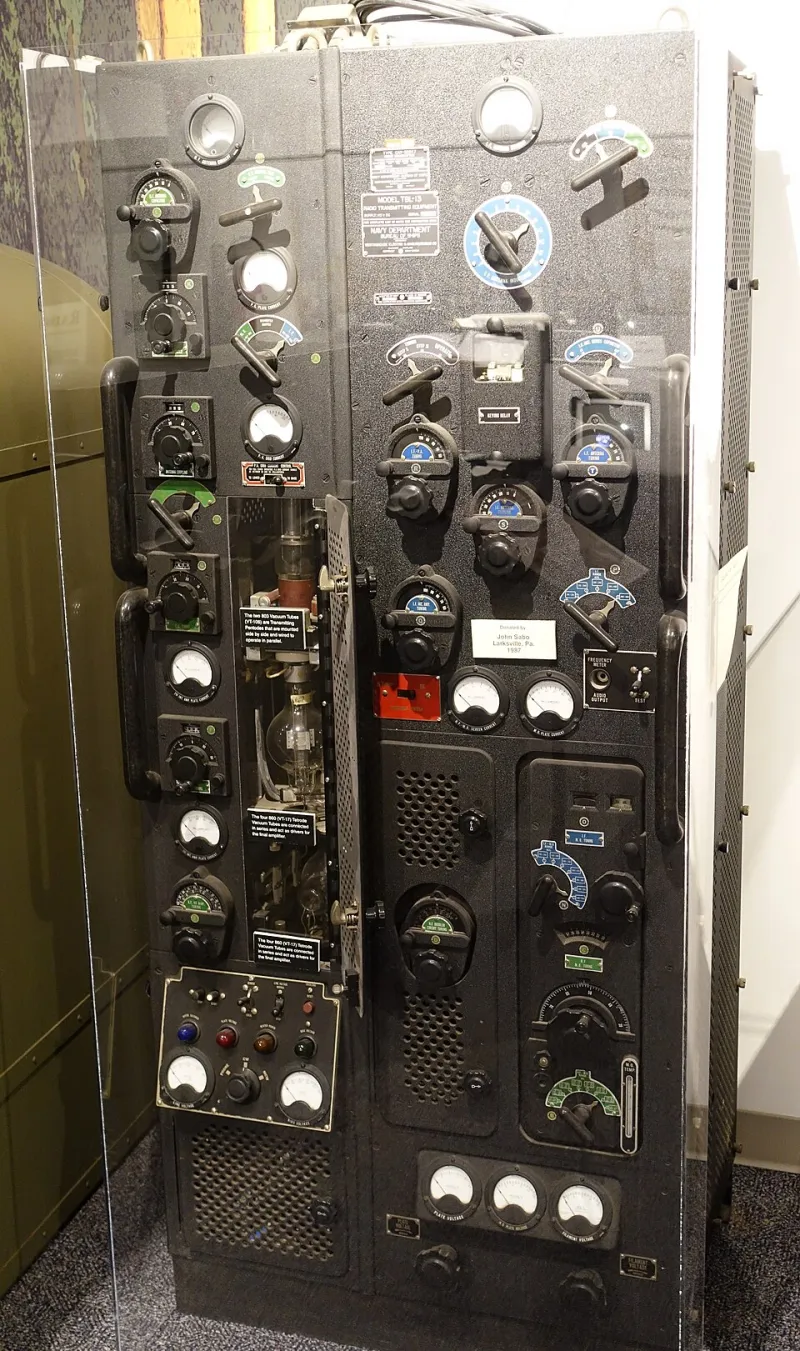
Photo: Daderot, CC0, via Wikimedia Commons
Turn an old FM dial slowly enough — really slowly, past the pop stations and the sports talk and the automated country feeds — and sometimes you hit something that doesn't quite fit. A voice with no call letters. Music that doesn't belong to any format. A preacher broadcasting from what sounds like a kitchen. A DJ who plays records that streaming services have never indexed.
America's radio spectrum is officially mapped, licensed, and regulated. Unofficially, it is deeply, persistently weird.
The Frequency No One Owns
The FCC maintains tight control over the broadcast spectrum in the United States. Every legitimate station has a license, a call sign, a wattage limit. The system is orderly on paper.
In practice, the edges are porous.
Pirate radio — unlicensed FM broadcasting — never really went away. It contracted during heavy enforcement periods and expanded during gaps. In cities like New York, Miami, Houston, and Los Angeles, low-power unlicensed stations have operated for decades in immigrant communities, music subcultures, and political organizing circles that felt the licensed dial had nothing to say to them.
The FCC estimates there are hundreds of active unlicensed broadcasters in the US at any given time, concentrated in urban areas but scattered across the country in forms that range from sophisticated multi-transmitter operations to a single guy with a $200 transmitter kit and a milk crate of records in a second-floor apartment.
"It's not about breaking rules for the sake of it," said Marcus, a former pirate broadcaster in the Miami area who ran a Caribbean music station for nearly eight years before going licensed. "It was about the fact that nobody on the dial was playing what our neighborhood wanted to hear. You either wait for permission or you just broadcast."
A History That Doesn't Start With the Internet
Underground radio culture in America has roots that stretch back before the internet made alternative media theoretically accessible to everyone.
In the late 1960s, freeform FM stations like KMPX in San Francisco and WNEW-FM in New York were genuinely countercultural — licensed, but operating in deliberate opposition to the commercial AM format that dominated mainstream listening. They played album cuts, ran long uninterrupted sets, let DJs talk like actual human beings.
That spirit migrated into pirate broadcasting when commercial pressures homogenized licensed FM through the 1980s and 1990s. The micro-radio movement of the 1990s — partly catalyzed by broadcaster Stephen Dunifer, who openly defied the FCC in California — pushed Congress and the FCC toward creating the Low Power FM (LPFM) license class in 2000, which opened a legal pathway for community stations with limited range.
LPFM stations are the legitimate descendants of that underground tradition. There are now over 2,000 of them operating across the US, and they represent some of the most genuinely local, idiosyncratic broadcasting still happening on American airwaves.
What You Actually Hear Out There
Spend time hunting the margins of the dial and you find a genuinely varied ecosystem.
In rural Tennessee, a licensed LPFM station run by a small church broadcasts bluegrass and gospel six days a week to a listening area of maybe 3,500 people. The programming hasn't changed meaningfully in fifteen years. The host knows most of his listeners by name.
In Chicago's South Side, a community radio station operating through an LPFM license has become a genuine organizing hub — broadcasting local news, community meetings, and music that reflects a neighborhood the commercial dial treats as invisible.
In parts of New York City, particularly in neighborhoods with large Caribbean and West African populations, unlicensed FM stations still operate with enough technical sophistication to stay moving when enforcement pressure shows up. They shift frequencies. They run lower wattage. They survive.
And then there are the truly strange corners: numbers stations, though largely a Cold War artifact, still appear occasionally on shortwave. Automated religious broadcasts run on frequencies that barely register. Ham radio operators hold conversations that feel like dispatches from a parallel universe where people still talk to strangers across long distances for no reason other than to make contact.
The Algorithm Can't Find This
Here's what makes underground and community radio feel genuinely different from streaming in 2024: it is, by its nature, unindexed.
Spotify knows what you've listened to. YouTube has your history. Every platform is building a model of your preferences, serving content back to you through a filter designed to keep you engaged. The recommendation engine optimizes for retention.
A pirate FM station broadcasting Caribbean music from a third-floor apartment in Flatbush has no algorithm. It has a person who decided what to play tonight. You either find it or you don't. It doesn't know you exist, and you can't search for it.
That's a fundamentally different relationship with media — one that feels almost archaic, and yet, to a growing number of people who've gotten tired of being profiled, strangely appealing.
"Radio is the last medium that doesn't know who you are," said one longtime LPFM station manager in New Mexico. "You're just a signal going out into the air. Whoever catches it, catches it."
How to Start Looking
Finding the strange corners of the American radio spectrum takes a little patience and the right tools.
For LPFM stations: The FCC's public database lists every licensed low-power FM station in the country with frequency and location. It's not glamorous, but it's comprehensive. Sites like Radio-Locator.com let you search by zip code.
For online streams: Many community and LPFM stations stream simultaneously. Directories like Radio Garden (radio.garden) let you drop a pin anywhere in the US and hear what's broadcasting — including stations you'd never accidentally encounter on a traditional dial.
For the analog experience: A basic FM radio with manual tuning — not digital presets — lets you scan slowly through the spectrum. In dense urban areas especially, you'll find signals that don't appear in any directory.
For shortwave: A shortwave receiver opens up a genuinely alien landscape of international broadcasts, religious programming, utility signals, and the occasional unexplained transmission that nobody seems to want to officially account for.
The Signal Persists
There's something worth sitting with here. In an era where every piece of media you consume is logged, tagged, and fed back to you through a system designed to predict and shape your preferences, radio — especially the unlicensed, low-power, community-built edges of it — operates on a completely different logic.
It broadcasts whether you're listening or not. It doesn't know your name. It can't recommend you anything based on your behavioral history. It just transmits, out into the air, and you either tune in or you don't.
For a medium that was supposed to be obsolete, that feels like a quiet kind of radical act.
Somewhere out there, a signal is going out right now that nobody sanctioned, nobody indexed, and nobody predicted you'd want to hear.
That's the point.