Rings and Rhythms: The Hidden Science Carriers Use to Map Your Life
There's a moment — maybe a half-second, maybe less — between when you hit dial and when the other end starts ringing. You've never thought about it. Nobody really does. But somewhere inside a carrier's infrastructure, that sliver of time is doing a lot of work. It's being logged, timestamped, cross-referenced, and quietly filed into a profile that knows more about your daily patterns than most people in your life do.
This isn't science fiction. It's the mundane, unglamorous machinery of modern telecommunications — and it's been running beneath the surface of every call you've ever made.
The Metadata Layer Nobody Talks About
Most people have at least a vague awareness that phone calls generate metadata. Who you called, when, how long you talked. Post-Snowden, that much entered the public consciousness. But the metadata picture is significantly more detailed than a simple call log — and that's where things get genuinely strange.
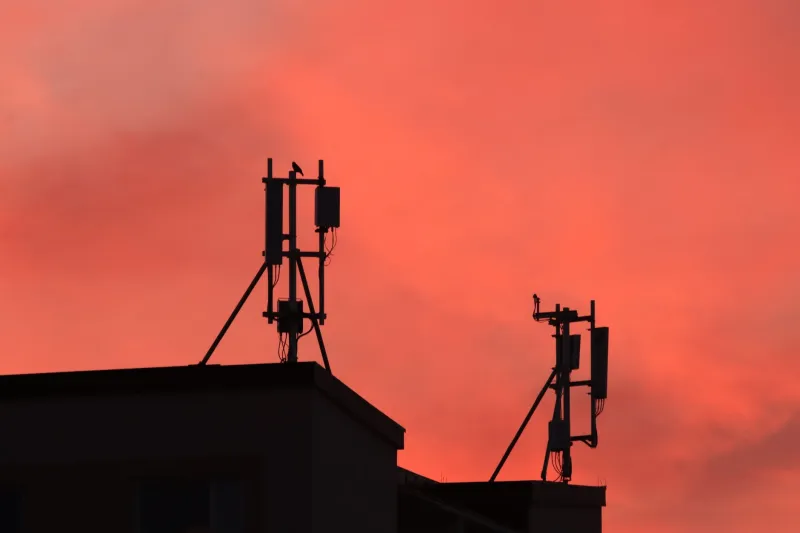
Carriers capture routing data: which cell towers your signal bounced through, how long the handoff between towers took, what kind of network you were on when you placed the call. They record whether you were stationary or moving. They note the time zone of the receiving number, the area code geography, even the relative signal strength at the moment of connection. Each of these data points is, on its own, pretty meaningless. Stacked together across thousands of calls over months and years? They start drawing a map of your life with uncomfortable precision.
That map isn't just about where you've been. It's about where you're going.
Predictive Profiling: When Patterns Become Prophecy
Telecommunications companies have been running behavioral analytics on call data for well over a decade, originally to predict churn — industry speak for customers who are about to cancel their service. But the same modeling infrastructure that can tell a carrier you're probably about to switch providers can also tell them a lot of other things.
Call timing is one of the richest signals. If you reliably make calls to certain area codes on Monday mornings, and those calls cluster around the same duration, the system starts building a behavioral fingerprint. It can infer work schedules, commute windows, even relationship proximity — a number you call briefly every evening around 6 p.m. reads very differently than one you call for forty-five minutes every Sunday afternoon.
Location-tagged call data adds another dimension. Carriers know which towers you're connected to, which means they know, roughly, where you are when you make calls. Over time, that data reveals not just your home and work locations, but your routines: the gym you hit Tuesday mornings, the part of town you drift toward on weekends, the unusual detours that break your normal patterns. Breaks in routine, incidentally, are particularly valuable to predictive systems — they often signal life changes, which are prime moments for targeted marketing or service upselling.
Who's Actually Buying This
Carriers don't always monetize this data directly. Sometimes they do — there have been well-documented cases of major US carriers selling location data to third-party aggregators, some of which ended up in the hands of bail bondsmen and bounty hunters, a scandal that drew FCC scrutiny around 2019. But the more common path is subtler.
Data brokers sit downstream from carriers, purchasing or licensing anonymized (and sometimes not-so-anonymized) behavioral datasets. These brokers then package and sell predictive profiles to insurers, financial institutions, retailers, and political campaigns. The call pattern data gets blended with purchase history, browsing behavior, and social graph information until what emerges isn't really "anonymous" in any meaningful sense — it's a detailed portrait with your name effectively written on it in invisible ink.
Some carriers have built their own advertising arms to capture this value internally. Others operate data-sharing agreements with parent companies or subsidiaries that technically keep the data "in-house" while still routing it toward commercial ends. The legal structures vary. The outcome — your behavioral patterns being monetized without your meaningful consent — largely doesn't.
The Delay That Tells a Story
Here's something most people would never think to consider: network routing delays are themselves a form of data. The microseconds it takes for a call to route through the network vary based on tower load, geographic distance, and network congestion. Carriers log these variations constantly, partly for quality assurance, partly because anomalies in routing can reveal things about infrastructure. But they also reveal things about you.
If your calls consistently route through congested urban towers during peak hours, that's a signal about where you spend your time. If your routing patterns shift dramatically on certain days — suddenly hitting suburban towers instead of downtown ones — that's a behavioral signal too. It's the kind of data that, in isolation, means nothing. But in aggregate, filtered through a machine learning model trained on millions of users, it becomes surprisingly predictive.
This is the part of the equation that rarely gets discussed in privacy conversations, because it's so abstract. People understand that their texts can be read or their location can be tracked. The idea that the timing jitter of a network handoff could contribute to a behavioral profile is genuinely hard to internalize — which is exactly why it flies under the radar.
What You Can (and Can't) Do About It
Honestly? Your options here are more limited than the privacy community sometimes likes to admit. You can use encrypted calling apps — Signal is the obvious choice — which routes calls over the internet rather than the traditional phone network, stripping out a lot of the carrier-level metadata. But your carrier still knows you're using Signal, still knows when and roughly where, and still logs the data points around that usage.
VPNs help obscure some of the internet-layer data but do nothing for traditional cellular call metadata. Using a prepaid phone with cash payment is the old-school approach and genuinely does reduce the linkability of your data — but it's not exactly convenient for most people's daily lives.
What's really needed is regulatory clarity. The FCC has taken some steps — the 2019-2020 enforcement actions around location data sales were a start — but the rules governing how carriers can use and share call metadata remain murky compared to, say, financial data regulations. There's no equivalent of HIPAA for your call patterns. There probably should be.
The Signal You Didn't Know You Were Sending
Every call you make is a data transmission in two directions simultaneously. The obvious one is the conversation itself. The invisible one is the behavioral signal your call sends into the network — the timing, the location, the routing path, the pattern it forms against the backdrop of everything else you've ever dialed.
You didn't sign up for that second transmission. It wasn't in the brochure when you picked your carrier. But it's been happening every time you've reached for your phone, building a picture of your life in the gaps between the rings — quiet, patient, and remarkably detailed.
The silence, it turns out, was never really silent.