Songs That Vanished: The Quiet Rewriting of Your Streaming Library
You remember exactly when you added it. Maybe it was a deep cut from an album you discovered at 2 a.m., or a song a friend sent you that immediately felt like yours. You saved it, dropped it into a playlist, let it live there. And then, somewhere between then and now, it disappeared — replaced by a greyed-out title, a dead link, or in the strangest cases, nothing at all. Just a gap where music used to be.
No notification. No explanation. No apology.
This is the part of streaming nobody puts in the pitch deck.
The Catalog Is Always Moving
Here's something the major platforms would rather you treat as background noise: the music libraries you browse aren't static. They shift constantly, governed by a web of licensing agreements, regional rights deals, distributor relationships, and label negotiations that have absolutely nothing to do with what you actually want to listen to.
When a licensing deal expires — or falls apart — songs get pulled. Sometimes whole albums vanish overnight. Artists who move between distributors can temporarily disappear from platforms entirely while the paperwork catches up. And when a song gets re-recorded for legal reasons (think Taylor Swift's Fearless (Taylor's Version) swapping in for the original), the version you saved might quietly get substituted for one you didn't choose.
The platforms handle this differently, but the outcome tends to feel the same from where you're sitting: your carefully built collection has been edited by someone else.
Your Playlist, Their Rules
There's a clause buried in every major streaming service's terms of service that more or less amounts to this: the content available to you is subject to change, and the platform isn't responsible for availability. In plain English, you're renting access to a moving catalog, not buying a seat at a fixed table.
That's not a secret, technically. But it's not exactly front-page information either.
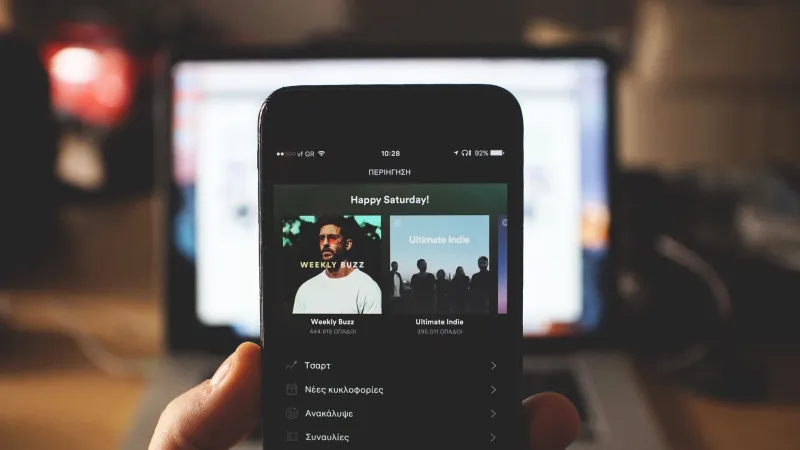
What makes it feel stranger is the personalization layer these platforms have spent years building on top of that reality. Spotify tells you it knows you. Apple Music talks about your library like it belongs to you. The whole emotional pitch of modern streaming is intimacy — the algorithm learns your taste, your mood, your history. Your Wrapped summary reads like a highlight reel of your year.
But intimacy built on a rental agreement is a weird kind of intimacy. The platforms curate a relationship with your listening identity while quietly reserving the right to edit the archive.
The Replacement Problem
The substitution issue might be the most disorienting piece of this. It's one thing to lose a song — you notice the gap, you move on. It's another to have a song replaced without any visible marker that a swap occurred.
This happens more than most people realize. A track gets re-released under a slightly different title, a remaster swaps in for an original recording, or a regional version replaces the one you saved. In some cases, the song still plays — just not the version you chose. And unless you're the kind of listener who notices subtle production differences or checks timestamps, you might never catch it.
For casual listeners, that's probably fine. But for people who care deeply about specific recordings — about the warmth of an original mix versus a digitally cleaned-up reissue, about the version of a song that existed in a particular moment — it's a quiet erasure of something that mattered.
History as a Moving Target
Your listening history is supposed to be a record. A log of what you actually played, when, and how often. It feeds into recommendations, personalized playlists, year-end summaries. It's the data spine of your relationship with a platform.
But that history isn't always preserved cleanly when catalog changes happen. Songs removed from a platform can disappear from your history too, or show up as unplayable artifacts — titles without audio, ghosts in the log. Some users have reported their listening data shifting after major catalog events, though platforms rarely acknowledge this openly.
It raises a question that doesn't have a clean answer yet: if a song is removed from the catalog, does your history of listening to it still belong to you? What does it mean to have a record of something the platform has decided to un-publish?
The Ownership Illusion
This whole situation is really just a sharper version of a tension that's been simmering since streaming overtook downloads as the dominant format. When people bought music — actually bought it, downloaded it, stored it locally — they owned a copy. It couldn't be taken back. The file sat on their hard drive regardless of what happened between labels and distributors.
Streaming traded that permanence for convenience and access. You get millions of songs instantly, anywhere, for a monthly fee. Most people made that trade happily, and honestly, it's hard to argue the access isn't remarkable.
But the trade-off is real, and it shows up most clearly in these quiet moments of loss. The playlist you spent years building isn't a collection — it's a list of pointers to files you don't control, living on servers you don't own, governed by contracts you never read.
That doesn't make streaming bad. It just makes it something different from what the marketing implies.
What You Can Actually Do
There's no perfect fix here, but there are ways to push back against the impermanence.
Services like Last.fm still let you scrobble your listening history to an independent log — a record that lives outside any single platform's control. Some dedicated listeners maintain local music libraries alongside their streaming subscriptions, buying digital downloads of tracks that matter most to them.
For playlists specifically, third-party tools exist that let you export your saved lists to a portable format, so you at least have a record of what was there before a catalog shift wipes it out. It's more friction than most people want, but for anyone who's ever felt that gut-drop of finding a song gone, it starts to feel worth it.
Beneath the Interface
Streaming platforms are extraordinary products. That's not really in dispute. But extraordinary products can still have uncomfortable truths running underneath them, and the mutability of your so-called library is one of them.
Your listening history is being written and rewritten by forces that have nothing to do with your taste or your memory. The songs you loved, the versions you chose, the moments you attached to specific recordings — all of that exists in a system that treats your collection as a byproduct of licensing logistics.
Somewhere in the gap between the glossy interface and the contract language underneath it, your music history is a little less yours than it looks.
That's worth knowing.